

We create unique strategies and plan things in advance with a view to make you on-time delivery with 100% customer satisfaction.
Date: March 15, 2022
Complete Guide – Everything You Need to Know About Google Analytics 4 (GA4)
On October 14, the industry giant Google came up with the most significant and amazing update of Google Analytics: Google Analytics 4.
Whenever any update arrives in the market, it is always good to know the recent updates to get informed with this as everyone in this profession has some curiosity about how the update affects your job or business concerns.
To be getting into brief, this current Google update has many industry owners and marketers running to figure out how this next age of Google Analytics will influence their future marketing strategies and actions.
Should you hustle to install it? And what drives it so distant from the recent version of Google Analytics? We know there are so many questions that are arising in your mind. But don't worry! In this informative article, we intend to fill you with everything that you want to know about Google Analytics 4. Stay tuned with us to gather the complete information.
What is Google Analytics 4 (GA4)?
In the initial stage, Google first founded Google Analytics on 14th November 2005. Since then, Google has strongly rolled out four loops of its analytics.
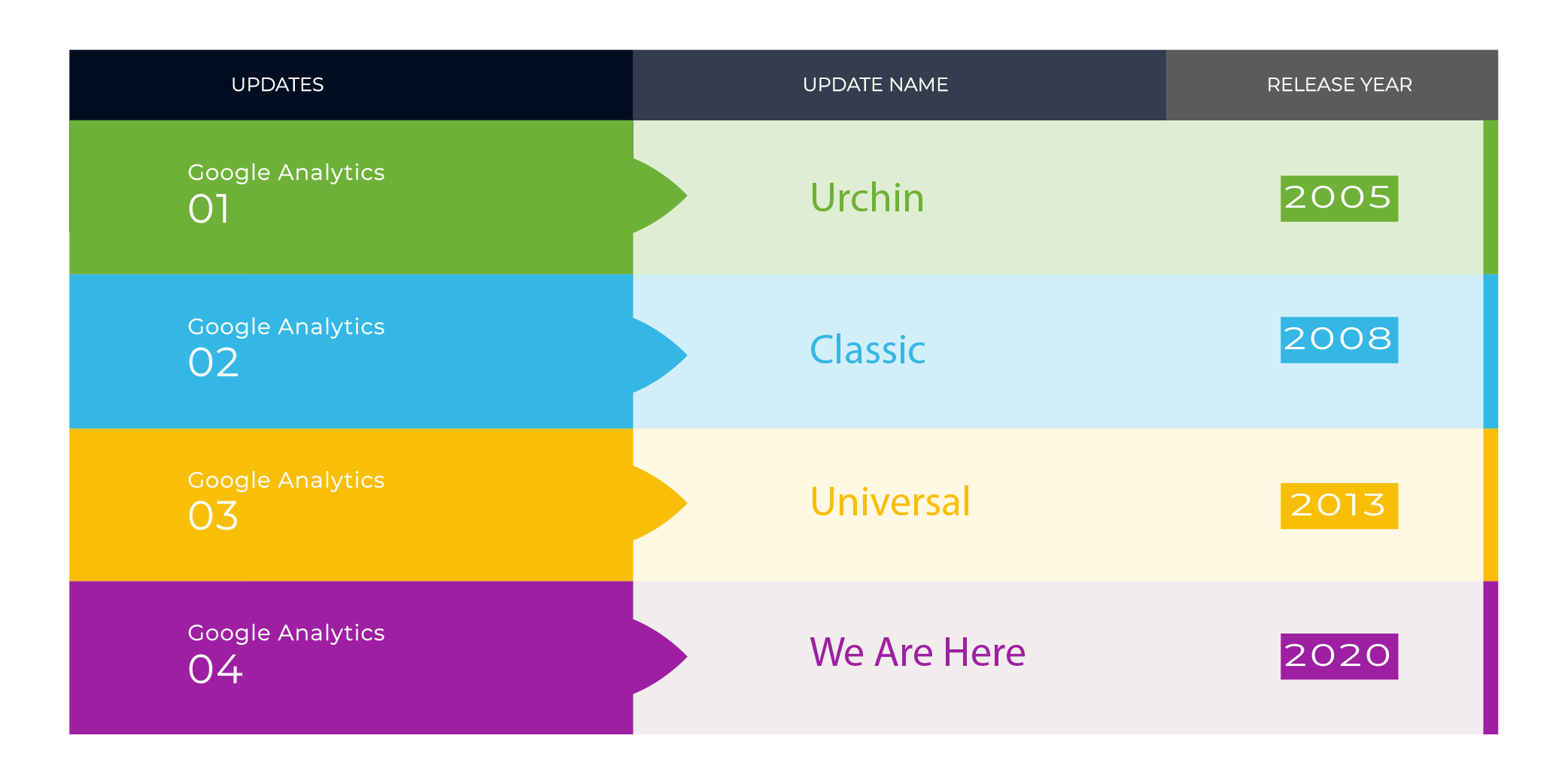
Google Analytics 4 (GA4) is the next age of Google Analytics. For the very first time, Google has revamped its platform from the bottom up, recasting how information is organized to give universal stature across websites and mobile apps. It vows to be the future of analytics, with advanced cross-platform tracking, AI-driven data, and privacy-centric strategy.
Unlike prior upgrade monotony, GA4 is a brand-new product full of goodies. This indicates starting afresh, with a unique learning curve to steer.
Google Analytics 4 in a Glance
Google explains that the primary purpose of Google Analytics 4 is offering a next-generation practice to X-channel measurement, “Privacy-first” tracking, and AI-based predictive data all in one go. Google Analytics 4 utilizes Google’s progressive machine learning standards to catch data for user conduct and website traffic. It can accomplish this without having to depend on “Hits” from each page.
Some key highlights that you see in Google Analytics 4 are:
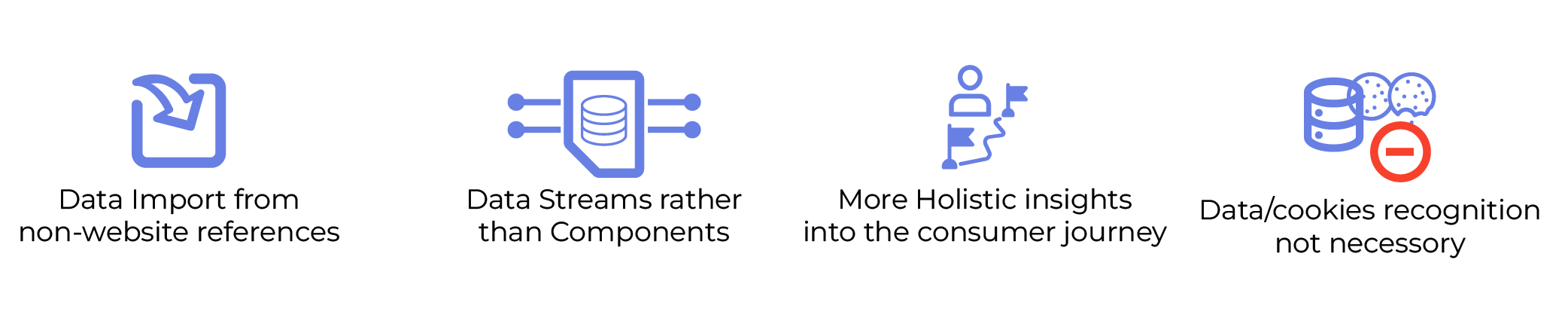
In Google Analytics 4, the data import functionality is now able to enclose a vast range of data from non-website references within one property.
In the latest version of Google Analytics, it provides you with “Data Streams” rather than the components and views utilized by the last Universal Analytics properties.
Google Analytics 4 is concentrated on providing digital marketers with a more holistic insight into the consumer journey. It is more attentive to estimating an end-to-end client journey rather than individual metrics across pages, components, or devices.
This "We are Here" update has been developed to function without any necessity for recognizing data or cookies
Top Tier Highlights you Get to See in Google Analytics 4 (GA4)
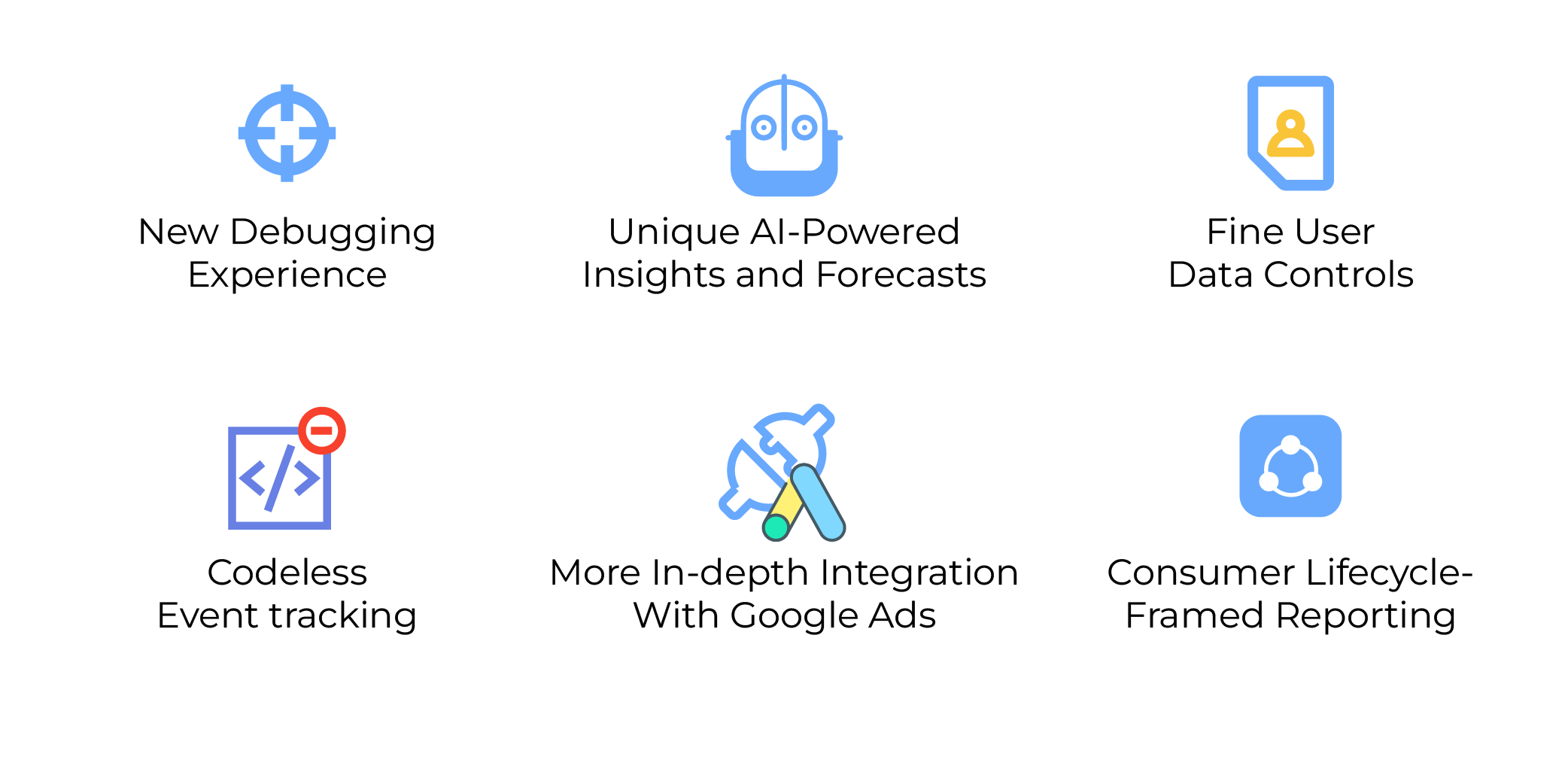
New Debugging Experience
In the previous versions of Google Analytics, Debugging has always been a challenge. But the marketers see the drastic change in GA4 as it includes a lot of advancements that make debugging in a snap. First, it offers the “live debugging view” which permits you to debug instantly from the interface.
In addition, if you’re utilizing the GTM attachment for Chrome, you can import data and locate in real-time what's causing the problem.
Unique AI-Powered Insights and Forecasts
Machine learning-powered insights in Analytics have been available in GA for the last few years, the latest insights and prognoses pushing their practice to Google Analytics 4 can automatically wave marketers to data trends such as increasing demand for a product they market. This feature is designed to help marketers to know more about customer preferences they might take in the future.
Fine User Data Controls
In the latest update of GA, Google provides an option to marketers that concede several data restrictions. Some amazing examples of such data regulations would be CCPA and GDPR. It appears in the market with the "Consent Mode" that is mainly intended for sites to achieve end-user support to accumulate analytics data.
In addition, data deletion abilities are also enhanced allowing companies to yield deletion recommendations from users. They can accomplish this without needing to extract more data than necessary.
Codeless Event tracking
Added codeless features make it more comfortable for advertisers to track and estimate on-site and in-app activities that matter in real-time such as a video play or page scroll, without including added code or putting up event tracking in Google Tag Manager.
In Universal Analytics, event tracking demands further processing which contains latency, and the information is generally not available until the next day.
Consumer Lifecycle-Framed Reporting
One of the most important and notable differences between Google Analytics 4 and Universal Analytics is how reports are collected. GA 4 has invented the reports to allow marketers to dig down into certain factors of the consumer journey.
For instance, with this feature, you can easily observe what media are pushing new clients in the user investment report, then utilize the concentration and retention reports to comprehend the efforts these customers take, and whether they stick around, after reclaiming.
Will Google Analytics 4 Replace Universal Analytics?
Google Analytics 4 isn’t implemented to replace Google Analytics 3 (Universal Analytics). If we are thinking things according to the marketer's perspective, it makes more sense to test with Google Analytics 4 while they are still operating with the current Analytics (GA3).
Google also makes it very clear that if you’re already utilizing their Global tag manager or GA’s international site tag, then there would not be any requirement to re-tag your website. But as the GA4 is the updated version of Google Analytics, you will see some differences in both of them. Having said that, here are three major differences between the revamped GA4 and the current GA3.
On the Basis of Measurements
One of the most notable differences you see in GA4 is its more advanced measurements. GA4 delivers more flexibility, forming with the capability to temporarily or permanently rule out users that show specific behaviors. This improvement is quite useful when re-targeting users.
On the Basis of Event Tracking
In this new version of GA, Google reaches straight-out-of-the-box ready to track further dealings. With the feature of “Enhanced Engagement,” you can automatically accumulate data on outbound clicks, file downloads, scrolling, video engagement, and many more.
On the Basis of Combined Web and Mobile Data
Analytics — this enables you to track, view, and handle the two data from a single central place. GA4, created with Firebase, allows you to seamless tracking of both web and mobile data. Another difference worth mentioning is how they have worked to attach mobile and web
How to Set Up GA4?
Configuring or stepping up GA4 is not a difficult task to do. To allow search engine optimization company to configure this new update easily, here we mention some easy-to-implement steps to set up GA4 into your current universal analytics.
Step 1: First, log in to your Google Analytics account.
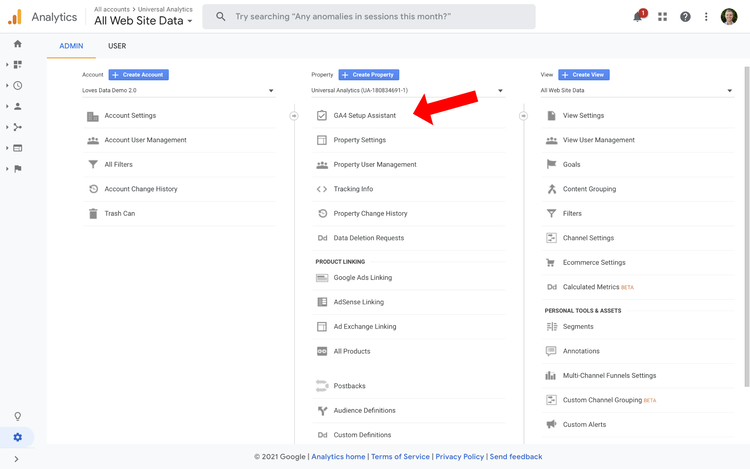
Step 2: Then click Admin. Gear icon, bottom left navigation.
Step 3: Ensure that your preferred account is fixed.
Step 4: Confirm that your desired property is selected.
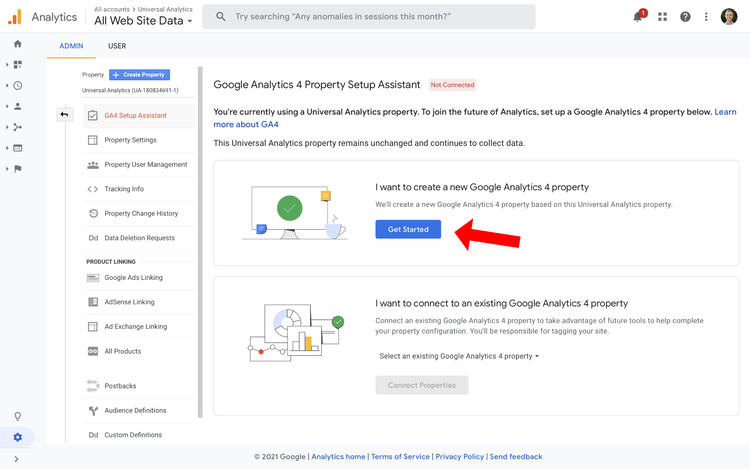
Step 5: Now, click on GA4 Setup Assistant, the first option in the Property column.
Step 6: Once you come inside the Setup wizard, click on the big blue button "Get Started".
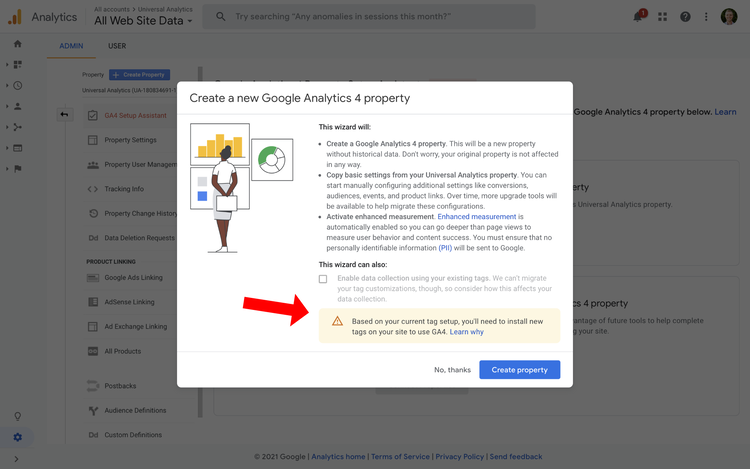
Step 7: In the end, just click on the appeared blue button to Create Property.
Should I Switch To Google Analytics 4?
By knowing all the things about GA4, now you are thinking about is this beneficial and important to switch to this new version of Google Analytics now?
Well, the answer is quite simple - YES!
The most important thing you need to think about is:
More useful data collection = Better informed marketing approaches.
To gather this useful information, you need to run GA4 properties parallelly with Universal Analytics. If you still don't think about setting it up, organizing data and maintaining your machine learning (ML) models will drive future analysis more significantly.
Conclusion
At the end of this article, we hope that you concluded that Google Analytics 4 brings amazing advantages that help Seo firm UK to build, promote and manage their brand on a rapid and steady base. After knowing all the features, highlights, steps, and importance, it's high time to get started with the newest version of GA to expand your business.
Recent Posts
- How To Increase Website Traffic In 2023?
- Why Collaborating with a Digital Marketing Agency is Crucial for Businesses
- What is the importance of UI/UX design in today’s digital landscape?
- How to Boost Your Website’s Growth with Digital Marketing in 2023?
- Power Your Success: How SEO Friendly Content can improve your search engine ranking?
